

What Is Media Literacy?
Key Takeaways
Media literacy is the ability to think critically about the messages we encounter every day, whether they come from news, social media, advertising, AI-generated content, videos, or other digital sources.
Being media literate means asking questions before accepting information at it is presented:
- Who created this message and why?
- What techniques are being used to get my attention?
- What perspectives are included or missing?
- Is the information accurate and supported by evidence?
- How might different people interpret this message?
Developing these habits helps students become thoughtful consumers, responsible creators, and informed participants in a rapidly changing digital world.
Media literacy is the ability to think critically about the information and media we see, hear, create, and share. It is the ability to access, analyze, evaluate, create, and act using all forms of media, creating informed digital citizens. These critical consumers of information understand, question, and use information thoughtfully instead of accepting it at face value.
Being a smart media user helps people make informed decisions about what to believe, create, and share.
What are Digital Competencies?
Digital competencies are the knowledge, skills, and behaviors people need to use technology effectively, safely, responsibly, and creatively. They go beyond simply using technology and focus on thinking critically, communicating responsibly, creating effectively, and making informed decisions in digital spaces. These competencies help students become confident learners, ethical digital citizens, and adaptable problem-solvers both online and offline.
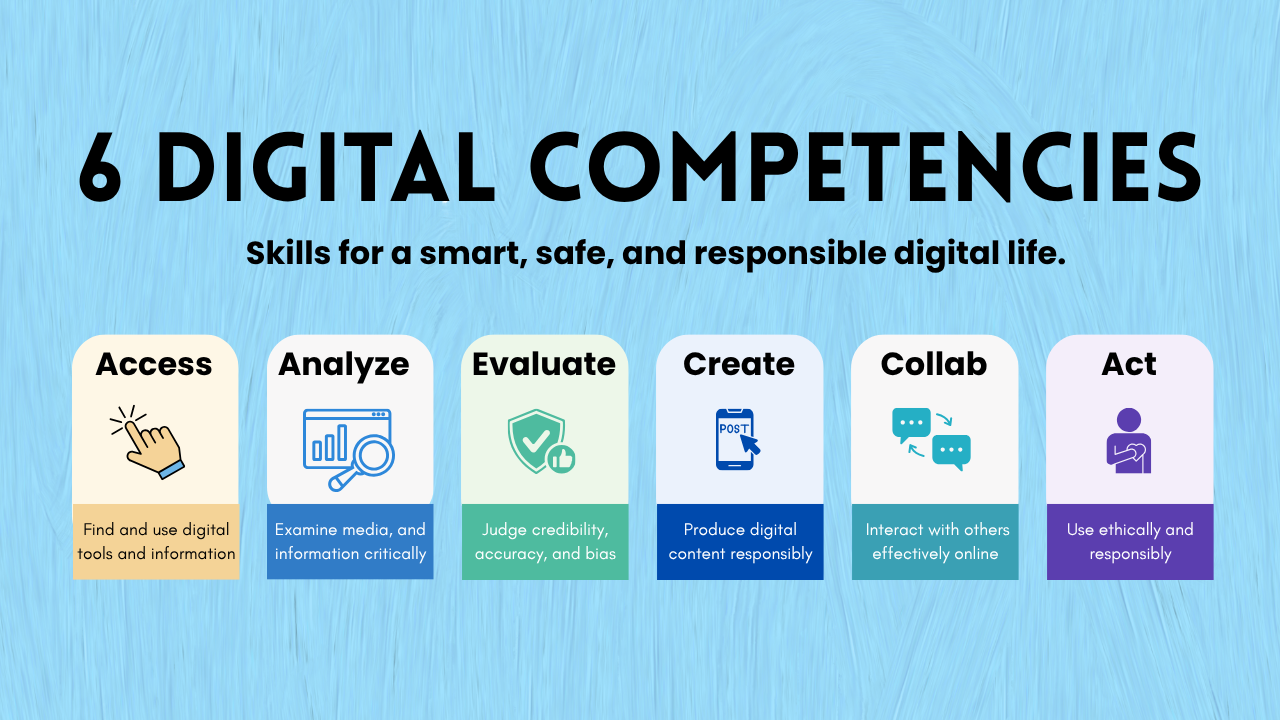
Without media literacy, students can’t tell what’s real, what’s manipulated, or what’s missing. With it, they’re empowered to navigate the digital world with confidence and integrity.
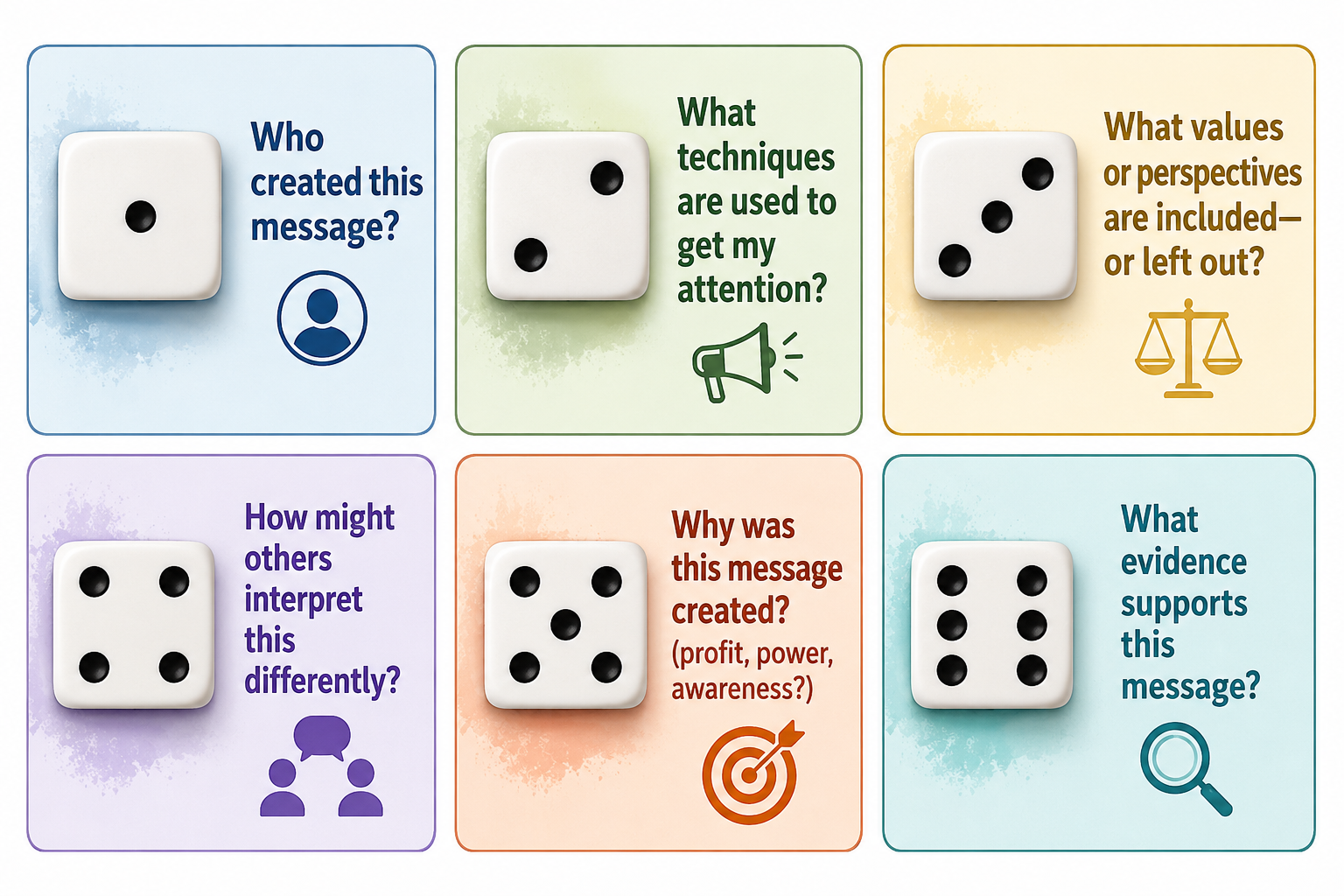
5 Core Questions for Analyzing Media Messages
Want a simple way to introduce media literacy? Start with these 5 core questions:
Who created this message?
What techniques are used to get my attention?
What values or perspectives are included—or left out?
How might others interpret this differently?
Why was this message created (profit, power, awareness)?
What evidence supports this message?
These questions can be applied to everything from TikToks and news articles to infographics and advertisements. Other examples include news articles, social media posts, videos, podcasts, memes, AI-generated content, websites and search results.
Put students in partners or small groups and use a strategy like Think Dots (dice needed) to have students explore these questions.
Tools to Teach Media Literacy
Here are some of the best free resources to support your media literacy instruction:
Common Sense Media: Lessons, videos, and digital citizenship resources
News Literacy Project: Classroom-ready tools and professional development
Checkology: Interactive media literacy lessons
