

The Power of Concept Mapping
What Is Concept Mapping?
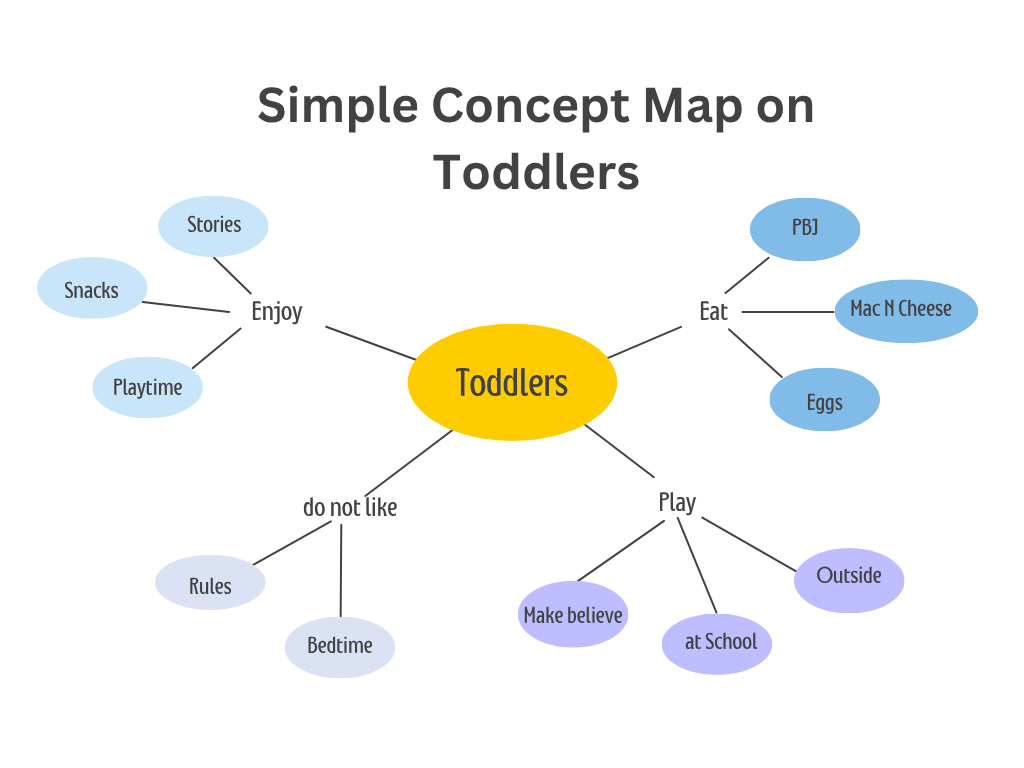
A concept map is a diagram that visually organizes and links related ideas. Students start with a central concept and branch out to related terms, facts, and ideas, drawing lines and arrows to show how they’re connected. Students also label the connections with short “linking words”.
This strategy promotes:
Deeper understanding of complex topics
Memory retention through visual structure
Synthesis of information across subjects
Teaching Tools
To introduce concept mapping, you could model it to students and/or share examples using the Slides below. However, if you have access, I suggest using BrainPOP’s Concept Mapping video. I’ve used it with 5th-8th graders – it’s clear, concise, and even 8th graders feel nostalgic with Tim and Moby.
Ideas for the Classroom
Concept mapping works across grade levels and subjects. Here are some practical ways to implement it:
Cross-Curricular Projects
Help students connect concepts across science, math, and humanities to see the bigger picture.
Pre-Assessment
Gauge what students already know by having them create a map before a lesson.
For example: Create a concept map showing what you know about grammar that must include:
The following 12 concept words: subject, verbals, predicate, action, nonuns, infinite, verbs, state of being, pronouns, gerunds, simple, compound
at least 25 total concept words (add in examples)
At least 10 linking words/phrases
3 crosscutting links
Review
Ask students to revise their maps after learning to solidify key takeaways.
Collaborative Work
Let students build maps in pairs or groups to encourage discussion and teamwork.
Topic Organization
Take complex topics, texts or ideas and break them into understandable formats that are visual and easy to follow.
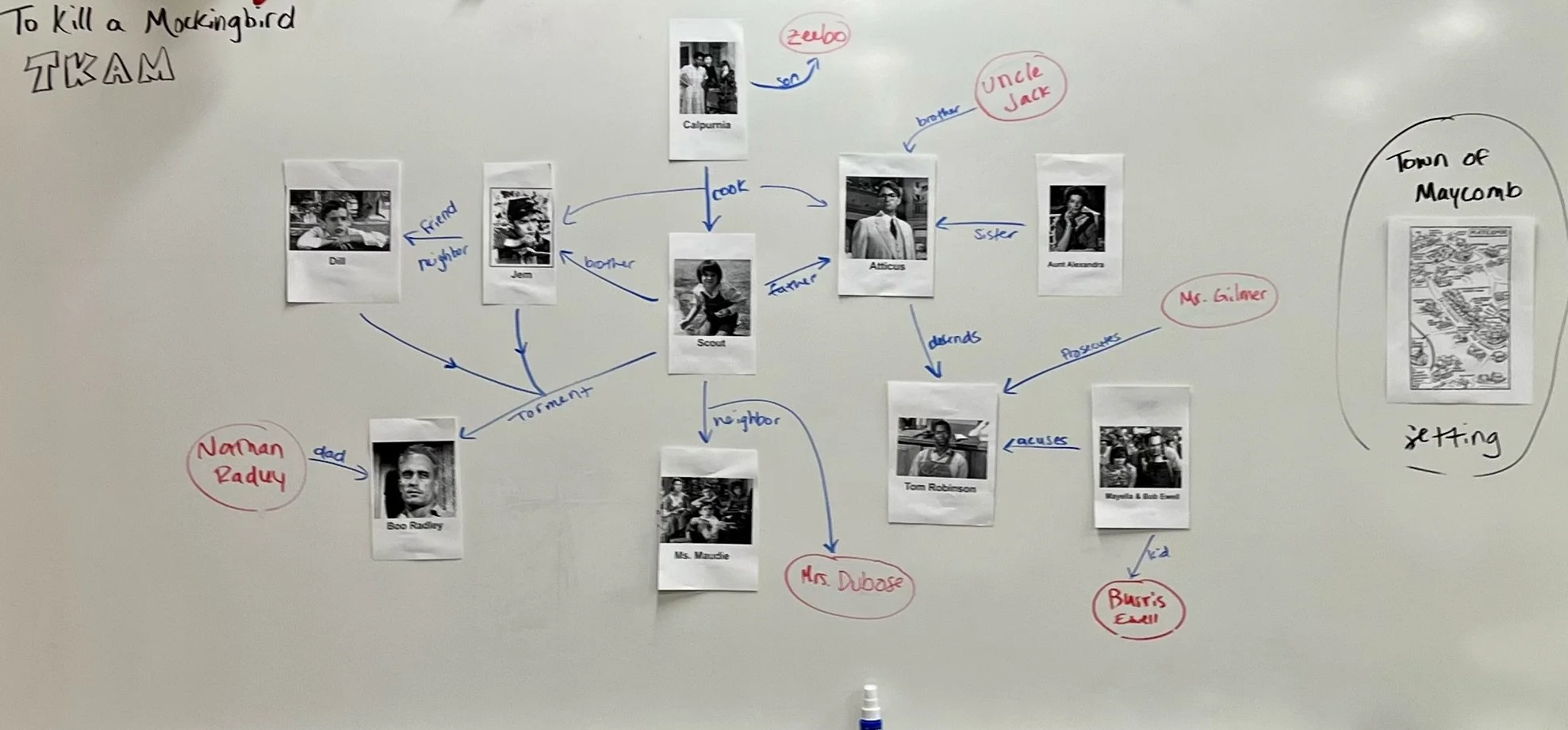
How characters in To Kill a Mockingbird connect
Cross-Curricular
No matter the subject, concept mapping is a useful tool that gets students thinking. By mapping out their ideas, students learn to make meaningful connections, think critically about what they’re learning, and organize information in a way that makes sense to them. Whether working independently or collaborating with peers, concept maps help students move beyond memorization and toward deeper, more independent thinking. It’s a powerful strategy for building confident, engaged learners.
