

Lateral Reading and SIFT
Key Takeaways
The SIFT method helps students evaluate online content for credibility and bias and is standards aligned.
SIFT stands for:
- Stop
- Investigate the source
- Find better coverage
- Trace claims to the original context
Teaching SIFT supports digital literacy, media literacy, and responsible research practices.
What is Lateral Reading?
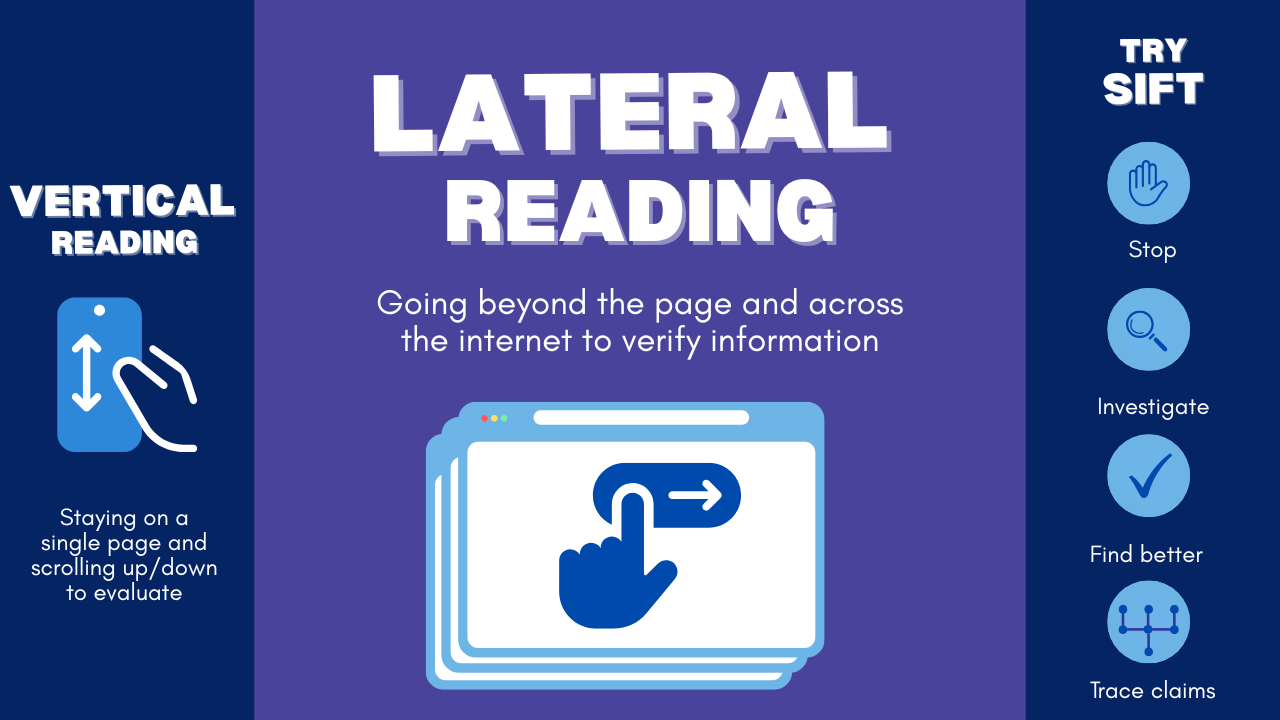
The strategy of Lateral Reading employed by expert fact checkers involves opening a new browser tab to evaluate a source based on information from other trusted sources, rather than evaluating the source itself for accuracy or credibility. Lateral reading is similar to Triangulation but focuses more on evaluating the source of the information rather than the information itself. - Princeton University Library
What is the SIFT Method?
Developed by Mike Caulfield, a digital literacy expert, the SIFT method breaks down the process of evaluating information into four simple moves:
Stop
Investigate the Source
Find Better Coverage
Trace Claims, Quotes, and Media to the Original Context
It’s designed to help users avoid falling for misinformation by promoting critical, lateral reading—opening new tabs to research the source rather than diving deeper into a possibly unreliable page.
